
Introduction
Scientific bias
Origin of the universe
Everything is relative
Farcical physics
Quantum claptrap
Everything is connected
Higher states of matter
Sunken continents
Climate cycles
Mind and matter
Psychic powers
Guided evolution
Health and disease
The meaning of life
We live in a universe of endless diversity and complexity, a universe whose mysteries will never be completely fathomed by our finite minds. The world’s sacred traditions assert that the visible, physical world is organized and ensouled by inner worlds of mind and spirit.
The physical sciences, on the other hand, focus solely on the physical and tangible. They collect and classify data, and try to build theories that make sense of them. Theories that win majority support become the dominant paradigms, which are enshrined in textbooks, taught in schools and universities, and popularized by the media. Sometimes they grow so firmly entrenched that their critics have great difficulty making their voices heard.
Scientists are unable to explain the physical universe in physical terms alone; instead their theories are littered with weird, abstract concepts, such as infinitely small particles, one-dimensional strings, 10- or 11-dimensional spacetime, ‘probability waves’ that ‘collapse’ into particles, curved space, expanding space, backward causation, ex-nihilo creation, and infinitely fast ‘nonlocal’ connections. Any scientific model or theory is a simplification, and mathematical abstractions may sometimes play a useful role in them. The problem arises when abstractions are treated as if they are concrete realities that can directly influence matter and therefore help explain physical processes and phenomena.
Events can only be explained by the action of real substances and forces, whether physically tangible and detectable or not. The materialist (or physicalist) assumptions that underly mainstream science are merely a belief system. Scientists who believe only in physical matter-energy would rather invoke mathematical abstractions than investigate the possibility of more ethereal states of matter-energy, and the action of mind and consciousness on the physical world.
Healthy scepticism and a questioning and critical spirit are called for when assessing widely accepted scientific theories, just as they are when exploring alternative, nonmainstream ideas. It’s particularly important to distinguish between facts and interpretations of facts. No scientific theory is based on facts alone; they all have certain assumptions underlying them, which determine how facts are interpreted. But the same facts are often open to different interpretations. Once a theory has become the dominant paradigm, anomalous data and alternative interpretations are more likely to be ignored or suppressed.
This article dispels the myth of scientific objectivity, outlines some of the strange and illogical concepts in official scientific theories, and sets out an alternative, theosophical perspective.
‘Scientists are human beings with their own biases, usually in favor of their preferred theories.’ – A. Unzichter1
‘The path of science is paved with the corpses of past hypotheses.’ – V. Beloussov2
Many people believe that science is superior to religion and spiritual traditions because it is firmly based on facts – facts derived from an objective analysis of reality. The ‘scientific method’ means that hypotheses and theories should be tested impartially by observation and experiment, without any contamination by scientists’ own ideas and beliefs. However, this ideal picture is far removed from reality.
Biologist Rupert Sheldrake writes:
Scientists ... constitute professional groups with their own initiation procedures, peer pressures, power structures and systems of rewards. They generally work in the context of established paradigms or models of reality. ... Usually ... experiments are motivated by a desire to support a favourite hypothesis, or to refute a rival one. What people do research on, and even what they find, is influenced by their conscious and unconscious expectations. ... Many practising scientists ... are influenced in their researches by personal ambition, preconceptions, prejudices and other sources of bias.3
In other words, scientists are human – and can therefore be just as biased, obstinate and fallible as anyone else.
Efforts to find scientific evidence to support theories of the innate superiority of men over women and of whites over other races have certainly owed more to prejudice than to facts. In the 19th century, anatomist Paul Broca stated: ‘In general, the brain is larger ... in men than in women, in eminent men than in men of mediocre talent, in superior races than in inferior races.’ Five eminent German professors consented to have their brains weighed after they died, but their brains turned out to be embarrassingly close to the average weight – which led Broca to conclude that the professors couldn’t have been so eminent after all!4 Critics of such theories have shown that sweeping generalizations based on brain sizes or IQ scores rest on systematic distortion and selection of data.
This is an extreme example of bias, but the tendency to publish only the ‘best’ results and to tidy up ‘messy’ data is widespread.
In most if not all areas of science, good results are likely to advance the career of the person who produces them. And in a highly competitive and hierarchical professional environment, various forms of improving the results are widely practised, if only by omitting unfavourable data. ... [J]ournals are disinclined to publish the results of problematical or negative experiments. Little professional credit results from unclear data or seemingly meaningless results.5
The ongoing degeneration of science into scientism – i.e. into ideology, belief and dogma – has been widely discussed. In 2005, statistician John Ioannidis wrote a famous article entitled ‘Why most published research findings are false’. Medical science is in a particularly dire state, with 85% of medical studies reaching questionable conclusions due to errors, sloppiness and fraud.
According to Richard Horton, editor-in-chief of The Lancet, a leading medical journal:
The case against science is straightforward: much of the scientific literature, perhaps half, may simply be untrue. Afflicted by studies with small sample sizes, tiny effects, invalid exploratory analyses, and flagrant conflicts of interest, together with an obsession for pursuing fashionable trends of dubious importance, science has taken a turn towards darkness. ... In their quest for telling a compelling story, scientists too often sculpt data to fit their preferred theory of the world.
A further problem is that big pharma advertising is an important revenue stream for medical journals and can consciously or subconsciously bias decisions on what they publish. Studies have found that journals which are entirely ad-financed are more likely to recommend advertised drugs in their articles than subscription-based journals. In 1992, Annals of Internal Medicine published a study showing that roughly 60% of the drug advertisements violated government standards for accuracy and quality. As a result the journal lost an estimated $1-1.5 million in advertising revenue, causing its two editors to resign.
Scientists’ claims of being objective are clearly exaggerated, and are fuelled by the large number of people who put their faith in orthodox science. Scientific ‘authorities’ have in some respects been elevated to a kind of priesthood, while those who challenge the prevailing orthodoxy are often treated as heretics, especially by those who earn a living from the established theories.
In general, conformism guarantees scientists a more comfortable existence. It is also promoted by the peer-review system, which is falling into disrepute due to its repeated failure to detect fraud and deceit. Richard Horton argued that peer review has been discredited ‘as a reliable technique for assessing the validity of scientific data’, and described it as ‘biased, unjust, unaccountable, incomplete, easily fixed [i.e. manipulated], often insulting, usually ignorant, occasionally foolish, and frequently wrong’.
In 2013 a member of staff at the American journal Science sent an article about a wonder drug for cancer to various scientific journals. It was a spoof paper, full of scientific and statistical errors, and should have been promptly rejected. Of the 106 journals that performed a peer review, 70% accepted the paper.
Most of the findings reported in most papers published by scientific journals cannot be replicated, giving rise to the ‘reproducibility crisis’. In 2012, scientists at the American drug company Amgen tried to reproduce the results of 53 ‘landmark’ studies, but only six (11%) could be confirmed. In 2015 it was found that around two-thirds of the published studies in top psychology journals were not reproducible.
An estimated 3.26 million scientific articles were published in 2024, in about 47,000 scientific journals. Around 50% of papers are never read by anyone other than their authors, referees and journal editors. Most of the thousands of scientific journals are now owned by a small number of giant, profit-driven corporations, like Elsevier (with over 2800 journals) and Springer Nature (with over 3000 journals). The academic publishing industry earned $2.538 billion in 2023 from article-processing fees paid by authors. Charges can exceed $11,000 for top-tier journals.
About 2% of scientists admit to having fabricated, falsified or modified data at least once in their career. However, when asked about their colleagues’ behaviour, over 14% say they have witnessed these practices, while 72% have witnessed less serious malpractices. More than 14,000 scientific papers were retracted in 2023, over half of them due to academic misconduct. Many of them were produced by ‘paper mills’ – businesses that write and sell fraudulent or low-quality articles to researchers who are under constant pressure to ‘publish or perish’.
Science is being divided into a growing number of specialisms, and it is often difficult for scientists to keep up to date with developments in their own subspecialism, let alone with developments in other fields. Specialists know more and more about less and less.
There is a widespread feeling that if the ‘experts’ in a particular field of scientific specialization are in general agreement, they must be right. However, ‘appeals to authority’ are unscientific. As astronomer Tom Van Flandern pointed out: ‘The validity of an idea can be determined solely by an examination of its merits, and not by an examination of its proposer.’ He continues:
[Specialists] are ultimately human. They may have vested interests. They certainly have egos. They may be concerned about saving face, or obtaining funding or tenure. Or they may simply have prejudices, areas of ignorance, or experiences which bias their thinking. While respecting them for their superior knowledge and experience in an area, we should never impute superior judgment to specialists. ... An expert who asks that we respect his judgment simply because he is an expert is being naive and egotistical.6
Van Flandern pointed out that when funds and budgets become tight, research on alternative theories is the first to be cut.
Today, if a proposal is not presented in terms of the mainstream paradigm, it receives negative reviews that give it no chance for funding in a climate where less than 20 percent of all proposals are approved for funding. Reviews are anonymous and non-appealable, so proposers are quickly conditioned not to bother trying to get support for research on alternative models.
So the journals become filled with papers interpreting data in terms of mainstream models, and the impression that these models are scientifically certain and unassailable becomes widespread. Once that happens, scientists who continue to question lose credibility and become labeled as ‘on the fringe.’ Their proposals are no longer given any serious review, and it becomes very difficult for them to get published.
Henry Bauer, a former editor of the Journal of Scientific Exploration, argues that knowledge monopolies and research cartels are doing great damage to science:
Future historians will look back on our era as the time when science led the whole word astray because, in cahoots with powerful self-interested commercial and ideological forces, science had succumbed to closed-minded dogmatism.7
Expecting mainstream proponents of a knowledge monopoly to look in unbiased fashion at evidence that contradicts their beliefs means expecting individuals to look in unbiased fashion at evidence which, if convincing, would crumble into disreputable shambles the careers they have built for themselves ...
Knowledge monopolies are not wilful conspiracies. ... The operative mechanism is surely cognitive dissonance: unconscious mechanisms safeguard human beings against comprehending the import of evidence that contradicts deeply ingrained beliefs.8
Journalist Richard Milton described mainstream science as follows:
in some ways big science, institutional science, is gaining many of the trappings of a banana republic dictatorship: a revenue of billions that is unaccounted for and an administration that is unaccountable to tax payers, except in a cosmetic way; the making and unmaking of reputations by a tame scientific press; the scientific police who make sure members of the profession are thinking along politically correct lines, and who patrol the content of scientific publications. ... Rationalist science has been immensely effective. But it has preferred to ignore the growing clamour of the inexplicable phenomena that loiter at its door like a band of ragged orphans begging for admittance.9
References
How big is the universe? How far does space extend? Are there boundaries anywhere? And if so, where are they and what lies beyond? Common sense tells us that the universe must be infinite – without limits and without end. And since nothing can come from nothing, boundless space and all the energy-substance it contains must always have existed.
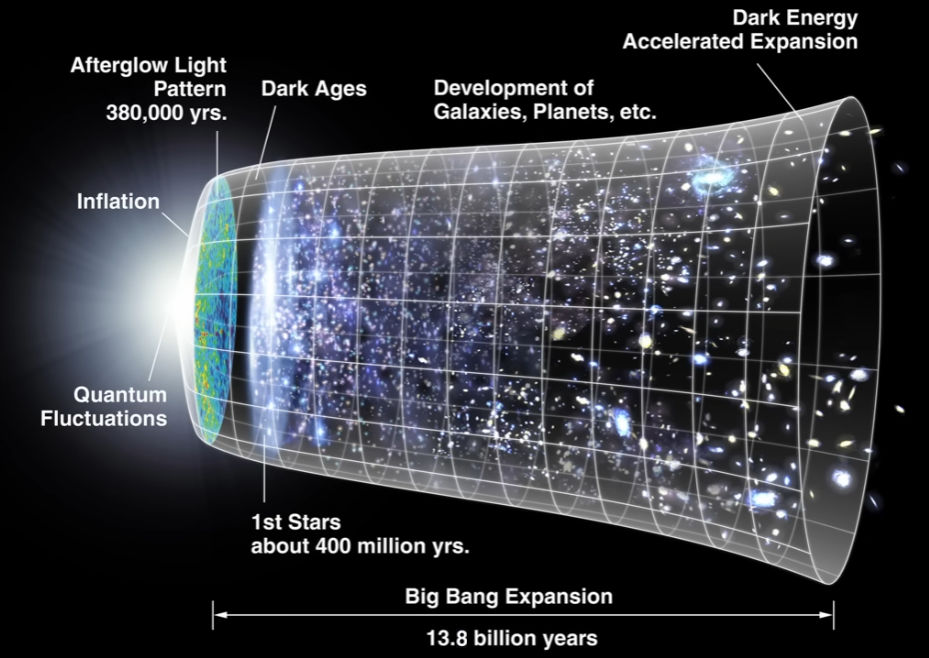
According to the mainstream big bang model, we live in an expanding universe. The universe we can currently observe through telescopes is about 93 billion light years across, but 13.8 billion years ago it was allegedly only eight hundredths of a trillionth of a trillionth of a millimetre across. Then space suddenly expanded trillions of times faster than the speed of light for a billionth of a trillionth of a trillionth of a second – an event known as ‘cosmic inflation’. When inflation ended, the observable universe was about 1.8 metres across, and the expansion of space then continued at a more leisurely pace. The energy released created an extremely hot and dense plasma of particles and radiation. As the universe cooled, atoms began to form, followed by stars, galaxies and planets. This is the absurd fantasy dreamed up by leading cosmologists.
Strictly speaking, big bangers believe that it is not space that is expanding, but ‘spacetime’ – a mathematical abstraction in which time is treated as a negative dimension of space. Some big bangers have even claimed that the universe originated when a tiny bubble of spacetime, a billion-trillion-trillionth of a centimetre (10-33 cm) across, popped spontaneously into existence out of nothing as the result of a random quantum fluctuation.
Since the universe appears to be infinite today, modern cosmologists generally believe that it must have been infinite 13.8 billion years ago, but that it is nevertheless expanding, in the sense that distant galaxies are moving further apart due to the ‘stretching’ of the space between them. Hence the belief that the observable universe was the size of a microscopic dot before the expansion of space began. Most big bangers believe the universe will expand and cool forever until all stars burn out, matter becomes utterly cold, all forces fade out, and the universe descends into eternal darkness.
The expansion of the universe according to big bang mythology.
There are several alternative versions of this cosmological fairy tale. According to the model of ‘eternal inflation’, inflation continues forever in most of the universe, while stopping in some regions, each of which becomes an entirely separate ‘bubble universe’, which expands from its own big bang and has its own physical laws. New bubble universes are supposedly created indefinitely, as part of an ever-growing multiverse.
There is also a ‘cyclic model’, which claims that our universe consists of two infinitely large parallel sheets or ‘branes’, separated by a microscopic gap (the ‘bulk’) in an inaccessible, unobservable fifth dimension. The branes are currently moving apart in the fifth dimension, causing infinite space to expand. After a trillion years or so, the bulk will begin to contract, and space will cease to expand but will not contract. A ‘crunch’ will occur as the branes collide and the fifth dimension vanishes. But it will immediately reappear, and the branes will ‘rebounce’ in a new ‘bang’, ushering in another period of expansion. This is the sort of drivel that is nowadays passed off as ‘science’.
The main evidence for a supposedly expanding universe is that if light from distant galaxies is passed through a spectrometer, the spectral lines produced by different elements are nearly always displaced towards the red end of the spectrum as compared with those produced by the same elements on earth. This indicates that light from distant galaxies is losing energy for some reason.
Big bangers see this as evidence that all galaxies are moving apart – due to ‘spacetime’ between galaxy clusters and superclusters (but not within galaxies or galaxy clusters) stretching like elastic. A more reasonable explanation is that light loses energy as it travels through space. A galaxy’s redshift also seems to depend on its stage of evolution, for there are low-redshift galaxies surrounded by high-redshift galaxies that have apparently been ejected from them as embryo-galaxies.
According to some writers, big bang cosmology and the idea of an oscillating universe that alternately expands and contracts vindicate the Hindu idea of the outbreathing and inbreathing of Brahmā (the cosmic divinity). However, this comparison is superficial. H.P. Blavatsky says that the expansion from within without of ‘mother space’ does not refer to an expansion from a small centre or focus but to ‘the development of limitless subjectivity into as limitless objectivity’.1 In other words, cyclical ‘expansion’ and ‘contraction’ can refer to the process whereby the highly ethereal summit of a world system unfolds and materializes into a series of steadily denser planes, and their subsequent infolding and re-etherealization.
G. de Purucker says that a nebula may grow in size while it is forming, partly as a result of the energies pouring into it from inner realms and partly through the accretion of physical matter. But once a galaxy or group of galaxies has attained its full growth, its structure and form remain relatively stable for the rest of its active lifespan. He adds that all things, including stars and galaxies, undergo rhythmic expansions and contractions, analogous to the human heartbeat, but that this has nothing to do with the theory that the entire universe or boundless space is expanding – which is ‘purely imaginary’, ‘a scientific fairly-tale’ and ‘all wrong’.2
According to theosophy, the planets, stars, galaxies, etc. that populate boundless space go through repeated cycles of life and death, just like the living beings that inhabit them.
References
Further reading
Trends in cosmology: beyond the big bang
In our infinite universe, everything is relative. ‘Big’ and ‘small’, ‘long’ and ‘short’, ‘fast’ and ‘slow’ are relative terms. For instance, if we reason by analogy – as above, so below – we can think of an atom as a miniature solar system, reembodying perhaps millions of times in what for us is one second, and our whole galaxy can be seen as a molecule in some supercosmic entity for which a million of our years are just a second. It is also logical to suppose that when objects move through space they undergo changes: their size and shape and the surrounding force field may alter, and the processes taking place within them may speed up or slow down.
The modern scientific theory of relativity is very different. It claims that when an object moves through space, ‘space itself’ – relative to that object – can expand or contract, and ‘time itself’ can speed up or slow down. General relativity theory predicts that even infinite space can expand or contract. According to Einstein’s theory, if two twins travel separately through space at a uniform velocity in relation to one another, each will supposedly end up younger than the other!
The idea that time can speed up or slow down is irrational, because time is not a concrete ‘thing’ existing independently of events. Our sense of passing time is created by the unbroken succession of events, of cause and effect, and the fact that a particular sequence of events may speed up or slow down certainly doesn’t mean that ‘time itself’ is flowing faster or slower.
Another Einsteinian dogma is that the speed of light is an absolute speed limit: nothing anywhere in the entire infinite universe can supposedly travel faster than the speed of light on our own physical plane. What’s more, if anything were to travel faster than light, it would supposedly travel backwards in time and arrive at its destination before it had even set off! In reality, it would simply reach its destination more quickly than if it travelled more slowly than light.
In mainstream relativity theory, gravity is not seen as a force that is transmitted across space; instead, it supposedly results from material objects distorting the ‘fabric of spacetime’ in their vicinity in some miraculous way. However, ‘warped spacetime’ is just a warped mathematical monstrosity and tells us nothing at all about the real, ethereal causes of gravity and antigravity.
Further reading
Space, time and relativity
Gravity and antigravity
According to the standard model of particle physics, there are 12 fundamental particles of matter: six leptons, the most important of which is the electron; and six quarks (since quarks are said to come in three ‘colours’, there are really 18 of them). Individual quarks have never been detected, and are believed to exist only in pairs or in groups of three (e.g. the neutron and proton). There are also said to be at least 12 force-carrying particles, which bind quarks and leptons together into more complex particles.
Leptons and quarks are supposedly structureless, infinitely small particles, the fundamental building blocks of matter. But since infinitesimal points are abstractions and the objects we see around us are obviously not composed of abstractions, the standard model is clearly deficient. How can a proton, with a radius of 10-13 cm, be composed of three quarks of zero dimension?
If the electron were infinitely small, the electromagnetic force surrounding it would have an infinitely high energy, and the electron would therefore have an infinite mass. This is nonsense, for an electron has a mass of 10-27 grams. To get round this embarrassing situation, physicists use a mathematical trick known as ‘renormalization’: they simply subtract the infinities from their equations and substitute the empirically known values. Leading scientists have admitted that this is ‘hocus pocus’.
String theory claims that all matter and force particles, and even space and time as well, arise from vibrating one-dimensional ‘strings’, 10-33 cm long but with zero thickness. And they are said to inhabit a 10 -dimensional universe in which the six extra spatial dimensions have spontaneously curled up so small that they’re undetectable. M-theory – the latest fad – postulates a universe of 11 dimensions, inhabited by objects with up to nine dimensions. There is not a shred of empirical evidence for such theories, which merely illustrate how pure mathematical speculation can degenerate into utter absurdity.
It has been suggested that the additional dimensions spoken of in string theory (measuring 10-33 cm across) are comparable to the worlds within worlds postulated in theosophy. But this is clearly not the case. The abstract, mathematical, ‘compactified’ dimensions postulated by string theory are for ever undetectable, whereas the inner worlds postulated by theosophy are real worlds of more ethereal energy-substance, which interpenetrate our own world and can be investigated by those who have developed their inner senses to the necessary degree. Moreover, on every plane of existence, objects and entities are always three-dimensional, for as H.P. Blavatsky writes: ‘popular common sense justly rebels against the idea that under any condition of things there can be more than three of such dimensions as length, breadth, and thickness’ (The Secret Doctrine, 1:252).
Clearly, subatomic particles must have a finite size and be composed of some form of energy-substance. Some researchers are pursuing the idea that they are vortices in an etheric medium.
Further reading
If scientists want to know where a subatomic particle is located, they make a measurement, and they obviously find the particle in only one place. In between measurements they don’t know exactly where the particle is, but they use an equation to calculate the probability of finding it in any particular place. In theory, the particle could be almost anywhere, though some locations are far more probable than others.
Some physicists ‘deduce’ from this that in between measurements particles actually are in all these different places simultaneously; they supposedly turn into ‘superposed probability waves’, which somehow ‘collapse’ into localized particles again when the next measurement is made. A few physicists go even further and say that this ‘collapse’ takes place only when we humans become aware of the result of the measurement, and that it is therefore our conscious minds that give reality to the material world.
A lot is made of the fact that the exact position and momentum of a particle cannot be measured simultaneously. There is nothing very strange about this, since any measurement must involve the exchange of at least one photon of energy, which disturbs the particle in an unpredictable way.
Yet many physicists claim that since they are unable to determine the exact properties of a particle or the path it follows, ‘therefore’ a particle does not follow a definite trajectory and does not possess any definite properties – until they choose to detect it and thereby collapse its ‘wave function’. The collapse of a mathematical wave function into an actual particle is only possible in the fairy tale world of modern physics. And the idea that physical reality only exists when humans consciously observe it is a ridiculous flight of human fantasy.
Mainstream scientists believe that events at the subatomic level can be absolutely causeless and lawless, and are incomprehensible to human logic. How a supposedly lawless quantum realm can give rise to the statistical regularities displayed by the collective behaviour of subatomic particles is not explained. Fortunately some physicists have developed other interpretations of quantum theory which retain the concept of causality and introduce the idea that physical particles are guided by ethereal waves.
Further reading
Quantum theory predicts that if an atom emits two photons with opposite spins, and the two photons fly apart in opposite directions, their behaviour will remain correlated, no matter how far apart they are, in a way that cannot be explained in terms of signals travelling between them at or slower than the speed of light. This means that if a measurement is made to determine the spin of one of the two systems, a simultaneous measurement on the second system will measure the opposite spin. This phenomenon is called nonlocality or quantum entanglement.
It is generally believed that experiments have confirmed the existence of these ‘nonlocal’ connections, but the experiments are not conclusive as they involve dubious assumptions and data manipulation practices. Moreover the standard view that nonlocality involves instantaneous, noncausal ‘action at a distance’, and does not involve the transmission of any sort of energy or signal between the ‘entangled’ systems is irrational.
It would be more logical to think that the particles concerned are communicating not absolutely instantaneously but merely faster than light – something that mainstream physics does not allow. Note that if we drop the mainstream assumption that particles have no definite properties until we measure them, ‘entangled’ particles are perfectly understandable: two photons that originate with opposite spins and fly apart will tend to retain opposite spins, without the need for any instantaneous or superluminal communication between them.
Some writers have claimed that quantum entanglement shows that science has proved the mystical tenet that everything in the universe is interconnected. This is a gross exaggeration. Quantum theory implies that quantum entanglement only occurs in very specific circumstances.
From a theosophical perspective, there are ceaseless interactions between all the various things and entities that make up the universe, including things and entities on different planes or levels of reality. And while signals and forces cannot travel infinitely fast, there is no reason to assume that the speed of light on our own physical plane is an absolute speed limit throughout the boundless universe.
Further reading
According to mainstream physics, matter particles interact by exchanging force particles, or ‘virtual’ particles, which form part of the ‘quantum vacuum’, the basic energy field underlying the physical world. ‘Virtual’ particles are supposedly continually appearing from nowhere and then disappearing so fast as to be unobservable. Each such event violates the law of the conservation of energy, but physicists turn a blind eye to this as it lasts for only a fraction of second. However, at any given moment there are unlimited numbers of virtual particles, so this amounts to a permanent loan of infinite energy from ‘nowhere’.
From a theosophical standpoint, the quantum vacuum is not the ‘bottom’ level of reality, but merely the lowest level that physicists have so far been able to detect. Physical particles can materialize out of the ether and dematerialize back into it. Energy circulates continuously through all the various planes of reality, and the conservation of energy applies only to infinite nature as a whole.
Present instruments allow us to detect about 100 octaves of electromagnetic radiation, ranging from X-rays and gamma rays through visible light to radio waves, but scientists believe that the electromagnetic spectrum could be infinite. They also accept that matter and energy are interconvertible. It is therefore logical to suppose that our physical world is no more than a single ‘octave’ in an infinite continuum of matter-energy, and is interpenetrated by numerous other planes, which consist of grades of matter with such different rates of vibration, both higher and lower than that of physical matter, that they are normally imperceptible to us.
Plasma is regarded by modern physics as the fourth state of matter, beyond the solid, liquid and gaseous states. It is described as an ionized gas consisting of a high density of positive or negative ions and free electrons, with virtually no overall electric charge. It is unique in the way it interacts with itself, with electric and magnetic fields, and with its environment, and it has lifelike, self-organizing properties.
Lightning bolts, flames and auroras are examples of plasma found on earth. The outer atmosphere of planets also consists of plasma, as do most stars and nebulae, together with interplanetary, interstellar and intergalactic mediums. In fact, over 99.9% of the visible matter in the universe is thought to exist in the plasma state.
Ball lightning is believed to consist of glowing balls of plasma created by electromagnetic forces, but no one can explain how such spheres form and preserve their shape, or how so much energy can be concentrated in such a small volume. It is often associated with thunderstorms, tornados and earthquakes. It may be as small as a pea or larger than a house. Occasionally it dematerializes silently, but it usually explodes violently.
Ball lightning can pass through glass windows without breaking them, and can even appear within a metal-screened environment, such as an aircraft. It can hover, fall to the ground, float through the air or move in a seemingly purposeful manner, such as inquisitively exploring a room. Strange ‘fireballs' are sometimes seen pacing aircraft. Related phenomena include large groups of luminous aerial bubbles or spheres, which may drift randomly, quickly or almost playfully. After sunset they might become nocturnal lights. During Space Shuttle missions huge plasmoid entities were observed in space, sometimes seeming to act intelligently.
What is called ‘plasma’ may turn out to include higher states of matter as yet unknown to scientists on earth. Whereas modern science says that the sun is a ball of plasma, or fourth-state matter, powered exclusively by thermonuclear reactions, theosophy says it consists largely of matter in its fifth, sixth and seventh states, and is powered mainly by etheric sources of energy. It has often been the study of electromagnetic phenomena that over the past 150 years has led several researchers to the discovery of ethereal, nonphysical states of matter and as yet untapped sources of energy.
The sciences of plasma physics and plasma cosmology are still in their infancy. Moreover, partly due to the compartmentalization of science, many scientists know little about the discoveries being made in these fields. Big bang cosmologists tend to underestimate the crucial role played by electromagnetism and plasmas in producing galactic and metagalactic structures, and focus overwhelmingly on gravity and hypothetical dark matter/energy.
According to the standard big bang model, the ordinary matter we see around us makes up only 5% of the mass of the universe. Invisible ‘dark matter’ allegedly accounts for 27%, and ‘dark energy’ for 68%. Both these hypothetical entities are inferred from observational evidence that can also be explained in alternative, more rational ways. They certainly have nothing to do with the more ethereal forms of energy-substance spoken of by theosophy. Dark matter cannot be the astral realms because enormous quantities of dark matter are said to be concentrated around galaxies in vast halos, whereas the astral realms pervade all space and are densest within and around physical objects.
The existence of dark matter is inferred from the apparently faster-than-expected orbital speed of stars far from the centre of some galaxies. It is said to consist mainly of hypothetical particles which, unlike all other known physical matter, do not emit or absorb light, and can be detected primarily by their gravitational effects. Despite decades of searching for such particles, none have been found. Some theorists have claimed that dark matter consists of five-dimensional ‘dark gravitons’ (massive particles that carry the gravitational force) which exist in a ‘dark dimension’, a hypothetical extra dimension measuring about one thousandth of a millimetre!
Dark energy is a hypothetical antigravitational force that supposedly causes space to expand at an accelerating rate, as inferred from redshift measurements. As already stated, there is no proof that stellar redshifts have anything to do with the expansion of boundless space. Some theorists say dark energy is a constant energy field (‘cosmological constant’) while others say it is a varying energy field (‘quintessence’). It has been speculated to originate from quantum vacuum fluctuations, one-dimensional or two-dimensional ‘wrinkles’ in the fabric of spacetime, the decay of dark matter, or the ‘dark dimension’. Such is the sad state of modern cosmology.
Further reading
The farce of modern physics
Trends in cosmology
UFOs: the psychic dimension (section 5)
The energy future (section 7)
Science is often said to be self-correcting: false theories that are initially accepted will eventually be abandoned, and correct theories that are originally rejected will later come to be accepted, with the result that science as a whole approaches closer and closer to the truth. The fate of the theory of continental drift is regarded as an illustration of this. When Alfred Wegener first put forward this theory in 1912, it was met with universal derision, largely because he failed to suggest a plausible mechanism for shifting the continents.
Several decades later, new data gained from paleomagnetism (the study of the magnetism of ancient rocks) and from the exploration of the ocean floor, led to a revival of interest in continental drift. It was integrated into a new theory – plate tectonics, which was quickly adopted as the ruling theory in the earth sciences. Although plate tectonics is regarded as a great triumph of the scientific method, it is confronted with a multitude of observational anomalies, and has had to be patched up with a variety of ad-hoc modifications.
According to plate tectonics, the earth’s outermost layer, or lithosphere, is divided into separate ‘plates’ that move with respect to one another on an underlying plastic layer known as the asthenosphere. In addition to the 13 major plates, several hundred independently moving microplates and ‘exotic terranes’ have had to be invented in the face of contradictory data. The lithosphere is said to average 70 km in thickness beneath oceans, and to be 100 to 250 km thick beneath continents.
However, it is now known that the oldest parts of the continents have very deep roots extending to depths of 300 km or more, and that the asthenosphere is absent or very thin beneath them. Even under the oceans there is no continuous asthenosphere. In addition, the boundaries of the main plates are sometimes ill defined or nonexistent. These facts make it impossible for entire plates to move distances of up to 7000 km. Moreover, the earth’s surface is crisscrossed by linear geological structures (faults, ridges, etc.), originating in Precambrian time, which often run for thousands of kilometres across ocean basins and adjacent continents – something that is incompatible with large-scale plate motions and seafloor spreading.

The simplistic world of plate-tectonic dogma.
According to the doctrine of ‘seafloor spreading’, new ocean lithosphere is constantly being created on either side of ocean ridges by the upwelling and cooling of magma from the mantle. As oceanic plates grow, they are ‘pushed’ away from the ridges and supposedly descend back into the mantle in ‘subduction zones’. These zones begin at deep-sea trenches and slope landward and downward into the earth, and are mostly located around the Pacific Rim. Subducting plates are said to produce the seismic activity detected at different depths in these zones.
However, ‘subduction’ zones have a highly variable and complex structure, with transverse as well as vertical discontinuities and segmentation, and bear little resemblance to the highly stylized pictures of continuous downgoing slabs depicted in geology textbooks. The fault zones are more likely to be very ancient fractures produced by the cooling and contraction of the earth.
The volume of crust generated at ocean ridges should equal the volume subducted, but 80,000 km of midocean ridges are supposedly producing new crust, whereas there are only 30,500 km of trenches and 9000 km of ‘plate collision zones’. How ocean crust is supposed to descend into the denser mantle has never been satisfactorily explained. This process should scrape sediments off the ocean floor, but trenches do not contain the huge quantities expected.
Plate tectonics insists that the entire ocean crust should be very young – no more than about 200 million years old. Yet thousands of older continental rocks, up to several billion years old, have been found in the world’s oceans. This evidence is largely ignored, though feeble attempts are occasionally made to explain it away – e.g. as crustal blocks that somehow got left behind during seafloor spreading. A major effort should be made to drill the ocean floor to much greater depths to see whether there are more ancient sediments beneath the basalt layer that is currently assumed to be ‘basement’.
About 90% of all the sedimentary rocks composing the present continents were laid down under water, and everyone accepts that enormous areas of the continents have repeatedly been submerged. The scale of vertical movements is indicated by the fact that the thickness of marine sedimentary layers in mountain belts is commonly over 10 km and can reach 23 km. The growing evidence of ancient continental crust in the present oceans, along with crustal types intermediate between standard ‘continental’ and ‘oceanic’ crust, indicates the former existence there of sizeable landmasses.

Former land areas in the Pacific and Indian Oceans, based on ocean-floor sampling and drilling, seismic data, and the location of ancient sediment sources. Only landmasses for which substantial evidence already exists are shown, but their exact outlines and full extent are as yet unknown.
The seafloor-spreading model implies that the age of ocean rocks should become progressively older with increasing distance from the midoceanic ridge, but the actual dates show a very large scatter. Based on the age of shallow-water sediments at different depths, some areas of the oceans appear to have undergone continuous subsidence, whereas others have experienced alternating episodes of subsidence and elevation.
According to plate tectonics, around 250 million years ago all the present continents formed part of a single supercontinent, Pangaea, consisting of Laurasia in the north and Gondwanaland in the south. Despite claims about how well the present continents can be fitted together, there are huge overlaps, and all the various reassemblies ignore the evidence for ancient landmasses in the present oceans.
The failings of plate tectonics vindicate the older view that continents undergo cycles of uplift and subsidence, and theosophical teachings about lost continents such as Atlantis and Lemuria.
Further reading
Sunken continents versus continental drift
Plate tectonics: a paradigm under threat
Palaeomagnetism, plate motion and polar wander
The earth’s climate has been changing ever since the planet was born, and passes through alternating cycles of warming and cooling. To stop the climate from changing we would need to control the sun’s cycles, the earth’s orbital cycles, geological activity, ocean cycles and currents, the water cycle, atmospheric composition and circulation, biosphere evolution, and the galactic cosmic ray flux, along with the interactions between all these factors.
According to the mainstream narrative, all the global warming since 1950 has been caused by human carbon dioxide emissions, and unless we urgently slash emissions we will face a climate catastrophe. However, the hysterical propaganda about climate change is based on shoddy science and alarmist hype, and is fuelled by the huge sums of money being thrown at the ‘climate crisis’. There is little evidence for any warming-related increases in extreme weather, and nothing happening today is truly ‘unprecedented’.
The earth’s current climate is classified as an ‘icehouse’, because it is among the coldest 10% of climates during the Phanerozoic, i.e. the last 540 million years. At certain times the poles were around 50°C warmer than today and the temperature difference between the equator and the poles was only 20°C, whereas it is about 40°C today, and reaches about 60°C during glacial maximums.
We are currently living in an interglacial period known as the Holocene. During the Holocene Climate Optimum, 9600-5500 years ago, temperatures were higher than today, as demonstrated by the much higher treelines and less prevalent glaciers. It was followed by a 5000-year cooling period known as the Neoglacial. The modern warming period began about 350 years ago in the middle of the Little Ice Age. The Little Ice Age (1300-1845) was preceded by the Medieval Warm Period (950-1300), when some regions of the earth were warmer than today.

Reconstruction of extra-tropical (30-90°N) mean decadal temperature variations relative to the 1961-1990 mean, showing the Roman Warm Period (RWP), Dark Ages Cold Period (DACP), Medieval Warm Period (MWP), Little Ice Age (LIA) and Current Warm Period (CWP).
The idea that CO2 is the main climate control knob is delusional; earth’s climate is mainly driven by natural forces, especially solar activity, multidecadal ocean cycles, changes in albedo (particularly cloud cover), and changes in the transport of heat from the equator to the poles. Official climate models seriously underestimate these factors.
In the 20th century, the average global temperature increased from 1916 to 1945, cooled slightly until 1976 (leading to scaremongering about a new ice age), then rose again until 1997, after which warming slowed considerably until 2015, despite a rapid rise in CO2 levels since 1950. Climate models which assume that all the warming in the second half of the 20th century was caused by CO2 are unable to reproduce the rapid warming in the first half of the 20th century or the mid-century cooling, and predict faster warming in the 21st century than has occurred.
Anthropogenic CO2 emissions are said to put 11 billion tonnes of carbon (GtC) into the atmosphere every year, while the oceans emit 77.6 GtC annually and the terrestrial biosphere emits 136.7 GtC. In other words, human emissions are only 4.7% of total emissions. The annual increase in atmospheric CO2 is 5.1 GtC. The mainstream view is that this is entirely due to humans, but some independent researchers argue that humans are responsible for only 10% to 25% of the CO2 increase, with the rest being contributed by the warming-induced expansion of the biosphere.
It appears that it is climate that drives CO2, not CO2 that drives climate. During the last few glacials and interglacials there was a close match between temperature and CO2, but temperatures tended to rise or fall between 50 and 1000 years before increases or decreases in atmospheric CO2. Today, short-term changes in atmospheric CO2 lag about 6 to 12 months behind short-term changes in global temperature. This is because rising atmospheric temperatures cause the oceans to release more of the CO2 dissolved in them.
The atmospheric concentration of CO2 is currently 431 parts per million (ppm), i.e. just over four hundredths of one per cent (0.04%) of the earth’s atmosphere. Far from being a pollutant, CO2 is a colourless, odourless, benign gas that is a vital ingredient in photosynthesis and plant growth, and essential to life on earth. Rising atmospheric CO2 concentrations have been good for the planet and have significantly enhanced plant productivity, leading to a significant greening of the earth. The current drive to achieve net-zero CO2 emissions by 2050 is delusional and doomed to fail.
Further reading
Climate delusions
Extreme weather
The energy future
Poleshifts (part 4)
Materialists/physicalists believe that mind and consciousness are byproducts of electrochemical processes in the brain, and die with the death of the body. However, they have never come up with a remotely plausible explanation of how the intricate workings of the brain create our minds and the alleged illusion of an inner, conscious self.
Materialism/physicalism asserts that inert matter-energy is the primary reality, and – through a series of largely random processes – eventually gives rise to organic matter, living organisms, brains, and finally mind and consciousness. Idealism, on the other hand, asserts that spirit or consciousness is the primary reality, and gives rise to matter, in all its various manifestations.
Theosophy rejects both materialism and idealism, and asserts that matter and spirit, or substance and consciousness, are in essence one – a view known as objective idealism or transcendental materialism. There are infinite grades of matter-energy, or rather consciousness-substance, both more ethereal and more material than physical matter. Our visible, tangible, physical world or plane is therefore interpenetrated by and interacts with an endless series of higher and lower planes and subplanes, just as our physical body is the outer garment of our inner astral, mental and spiritual constitution. Life and consciousness are universal, just like substance, and all forms of matter – on whatever plane – therefore possess a degree of life and consciousness. Spirit can be called etherealized matter, and matter can be called concreted spirit, but ultimately they are two aspects of one unitary essence – sometimes called consciousness-life-substance.
Dualists argue that consciousness and matter are independent but complementary aspects of reality. They regard mind/consciousness either as a property of matter, but one that cannot be reduced to the activity of matter, or as a nonphysical substance. Theosophy agrees that mind and physical matter are different types of energy-substance, but this is only a relative duality. If mind were absolutely different from matter, it would not be able to interact with and influence matter.
The idea that our brain does not generate consciousness but is the instrument through which consciousness operates in the physical world is widely shared among nonmaterialist researchers. Larry Dossey, for example, writes: ‘The brain does not produce consciousness at all, any more than a television set creates the programs that appear on its screen.’ He argues that the brain acts as a receiver for ‘mind at large’ or a ‘universal mind’, whose information it transmits, filters and transforms. He believes that the universal mind is beyond space and time. However, the idea that an abstract spaceless and timeless realm containing information (but allegedly no energy of any kind) can communicate with our own spatiotemporal world of matter-energy makes zero sense.
The theosophical perspective is rather different. Our inner constitution comprises several components: the astral model-body, the lower mind (kāma-manas), the reincarnating soul (higher manas), and our spiritual-divine self or monad (ātman-buddhi). There is constant communication and interaction between all these different levels. The state of development of our physical brain and body determines the extent to which the higher parts of our constitution can express themselves in the physical world. Moreover, our own higher mind exists within a whole hierarchy of larger minds, including the collective mind of our planet, solar system, galaxy, and so on.
Evidence for the existence of subtler bodies and a conscious self distinct from the brain is provided by research into life fields, phantom limbs, paranormal and mediumistic phenomena, multiple personality, out-of-body and near-death experiences, and children who remember past lives.
Further reading
Consciousness-life-substance
Life after death: evidence for survival
Astral bodies
Scientific investigation of paranormal phenomena has been conducted since the rise of the spiritualist movement in the mid-19th century, and a vast body of peer-reviewed evidence for the reality of psychic phenomena now exists. This particularly applies to extrasensory perception (ESP) and to micro-psychokinesis, which involves the influence of consciousness on atomic particles in electronic devices.
Macro-psychokinesis involves the movement of larger objects by mental effort, and includes materializations, dematerializations, teleportation and levitation. It has received far less attention from parapsychologists. But during the heyday of spiritualism some prominent scientists, such as William Crookes, investigated several notable mediums and concluded that phenomena such as ‘spirit’ materializations were often genuine.
Mainstream scientists still tend to dismiss the reality of psychic phenomena. One scientist who was asked to review an article about clairvoyance said: ‘This is the kind of thing that I would not believe in even if it existed.’ Philosopher Daniel Dennett went a step further and said that if paranormal phenomena turned out to be real, he would commit suicide!
To explain telepathy, clairvoyance and precognition, some modern researchers invoke quantum ‘nonlocality’ or ‘entanglement’. Nonlocal connections supposedly enable information to be accessed from elsewhere or exchanged between minds absolutely instantaneously without any transfer of any energy of any kind and without any weakening of the connections with increasing distance. This is illogical; such phenomena must involve an exchange of energy-substance, but of a nonphysical kind and perhaps faster than light.
Some scientists even claim that information can be obtained ‘nonlocally’ from the actual past or the actual future; in other words, our minds can supposedly time-travel nonlocally. A more reasonable point of view is that it is possible to see clairvoyantly the records of the past imprinted in the astral and ākāśic realms, and the general outline of probable future events, which are foreshadowed in the present because the present is the parent of the future.
To explain the mind’s ability to affect matter at the atomic level, some researchers invoke the absurd theory that subatomic particles dissolve into nebulous ‘probability waves’ when they’re not being observed, and then ‘collapse’ into real particles again only when we try to measure them, and they add that in some cases our conscious minds can ‘nonlocally’ influence the outcome of this mysterious ‘collapse’.
Russell Targ was one of the founders of the CIA- and military-sponsored Stargate Project (1972-95) for investigating psychic phenomena. He invented the notion of a ‘nonlocal hyper-dimensional space-time’, which includes four additional ‘imaginary’ dimensions – three of space and one of time. An ‘imaginary’ dimension is basically a real dimension multiplied by the square root of minus 1 (known as the ‘imaginary number’). These extra dimensions supposedly allow there to be ‘zero spatial and/or temporal distance’ between a person’s mind and a remote location on earth or a future event, thereby ‘explaining’ remote viewing and precognition. This theory is pure garbage!
From a theosophical perspective, psychic phenomena are not explained by mathematical abstractions but by the action of subtler forces, energies, states of matter, and entities (including the decaying astral souls of the dead), operating on other (three-dimensional) planes of existence that occupy the same space as our physical world but whose vibrational rate puts them beyond our normal vision.
Further reading
Psychic powers
Psi wars
Life beyond death: evidence for survival
Visitors from the twilight zone
According to the reigning dogma of neo-Darwinism, the first living organisms arose by chance in the primeval oceans and have gradually evolved towards greater complexity and diversity through random genetic mutations, with the least well-adapted variations being weeded out by natural selection (survival of the fittest). However, the origin of new types of organisms through natural selection has never been observed in action, and 99.9% of genetic mutations are harmful or even lethal.
The probability of a cell developing by chance alone is staggeringly remote, and this is even more true of intricate organs such as the human eye or brain. In the case of the mammalian reproductive system, all its complex features would have to emerge simultaneously in males and females, in perfect working order.
What’s more, the genetic code merely contains instructions for making proteins; it does not specify the way the proteins are arranged in cells, cells in tissues, tissues in organs, and organs in organisms. In other words, it does not explain the body plans of different organisms. Nor, for example, does it explain the ability of a caterpillar to metamorphose into a butterfly. In short, genetic mutations cannot explain the emergence of new creatures. The same goes for epigenetic modifications, which are chemical changes that regulate gene activity by turning genes on or off, and are also said to be purely random.
The fossil record shows that most species appear on the scene very suddenly, live for millions of years essentially unchanged, and then die out. Insects, fish, birds, vertebrates – all appear as if out of nowhere. There is no continuous series of transitional fossil forms between major groups of species – between invertebrates and fish, fish and amphibians, amphibians and reptiles, reptiles and birds, reptiles and mammals, and apes and humans. The fossil record gives little or no indication of how the fins of fish became the legs and feet of amphibians, how gills became lungs, scales became feathers, and legs became wings.
If bacteria are starved by feeding them a substance they can’t digest, they begin to mutate many orders of magnitude faster than the ‘spontaneous’, ‘random’ mutation rate, but only in genes that subsequently enable them to consume the substance and survive. This phenomenon of ‘directed mutations’ or ‘adaptive mutations’ may also explain the speed at which pests, from rats to insects, develop resistance to poisons.
Genes and organisms that respond successfully to environmental challenges are not acting randomly but purposefully, and this points to an instinctive intelligence at work that goes beyond purely physical mechanisms and processes. Theosophy posits the existence of a universal mind and memory to explain evolution. Each new cycle of evolution builds on the evolutionary patterns, prototypes and pathways arising from past cycles. Transitional forms are largely absent from the fossil record because new types of creatures must first take shape on the ethereal level before they materialize into visible, physical forms.
Animal and plant breeders have applied ‘intelligent selection’ to create many new breeds and varieties of domesticated animals and cultivated plants, but they’ve failed to produce any changes on the scale required by Darwinian theory for the evolution of creatures of a completely different type. To explain the stunning diversity, creativity and ingenuity of life, many scientists invoke all sorts of new ‘laws of nature’, ‘organizing principles’, ‘creative urges’ and ‘directing influences’. One biologist commented that, instead of acting blindly, ‘chance’ seems to have ‘a pattern and a reason of its own’.
From a theosophical standpoint, these vague terms denote the habits, or instinctual activities, of a whole spectrum of nonphysical forces and entities, ranging from elementals to spiritual intelligences. The idea that there are paraphysical energies and entities at work makes more sense than the belief that there are abstract ‘laws’ and ‘principles’ floating around, magically creating order out of chaos, or that chance and spontaneity just happen to be creative. According to theosophy, the universe and everything within it grow and work and are guided from within outwards.
Further reading
Evolution and design
Human origins: the ape-ancestry myth
Evolution in the fourth round
According to the germ theory of disease, we are constantly at risk of being invaded and infected by bacteria and viruses. To fight disease, we’re told that we need to suppress symptoms with pills and medicines, kill germs with antibiotic and antiviral drugs, and prevent infection by means of vaccines. This dogma has made big pharma one of the most profitable industries on earth.
The fact that certain microbes are often present during a disease process does not prove that they cause the disease in question, just as the presence of firefighters at the scene of a fire does not prove that they started the fire. Many people ‘infected’ with an alleged disease-causing microbe fail to get sick, and in many sick people the relevant microbe cannot be found.
Bacteria play a vital role in nature: they digest and dispose of dead and dying tissue. In other words, they are saprotrophs (garbage eaters). They do not normally attack healthy tissue and are not the root cause of disease, but they can produce toxins that cause symptoms. A low-oxygen, highly acidic body provides an environment in which disease (and associated microbes) can thrive. For instance, cholera is not directly caused by Vibrio cholerae bacteria, which are found in both sick and healthy people, but by the toxin they produce under low-oxygen conditions. Bacteria can also cause adverse effects if they are introduced into the body, or reach a particular part of the body, in unnatural ways, such as via injury, bites, injections or surgery.
Viruses were invented in the late 19th century based on the assumption that any diseases that could not be attributed to bacteria must be caused by a microbe too small to be observed under a normal microscope. After the development of the electron microscope in the 1930s, microbiologists were able to see tiny blobs in and around sick cells. They immediately jumped to the conclusion that these blobs were viruses and were causing the cells to become sick.
This was a big mistake, because we now know that when cells start to break down, they produce all kinds of particles indistinguishable from ‘viruses’. Moreover, no alleged virus has ever been properly isolated and purified and shown to cause disease by means of scientifically controlled experiments. Instead, virologists take fluid from a sick person, and add it to a culture of human or monkey cells which have been starved of nutrients and poisoned with antibiotics. If some of the cells then become unhealthy or die, the invisible virus is assumed to be responsible – and is said to have been ‘isolated’. But when independent scientists conduct a control experiment in which no ‘virus’-containing fluid is added to the poisoned and starved cell culture, the cells still become damaged and die!
To show that viruses cause disease, fluid assumed to contain a virus is administered to laboratory animals such as mice or monkeys in unnatural ways. If the animals show any ill effects, these are blamed on the virus. For example, monkeys are tied up in a vacuum chamber and ‘measles-infected’ fluids are pumped into their trachea and lungs through a tube in their noses; any tissue damage is then attributed to the measles virus, rather than to the abuse they have suffered.
Virologists have never extracted an entire genome from an alleged disease-causing virus and then sequenced it end to end. Nowadays, computer programs are used to artificially assemble thousands of selected DNA or RNA fragments found in patients into a complete ‘viral’ genome, by matching overlapping regions and adding any missing sequences. This means that none of the tests for a particular virus (or rather, alleged fragments of the alleged virus) has ever been validated. Virologists admit that such tests can respond to material from other sources, including other supposed viruses.
Our state of health is determined by our diet and lifestyle, by the environment we live in, our exposure to all kinds of toxins, by how we cope with our life experiences, and by our thoughts, emotions, beliefs and expectations. Noncommunicable diseases – i.e. chronic diseases like cancer, cardiovascular diseases, and dementia – kill twice as many people a year as so-called infectious diseases, and they are understood to be largely caused by unhealthy practices.
In 1986 under 10% of American children had a chronic health condition, whereas nowadays the figure is well over 40%. It is noteworthy that, during that period, the number of routine vaccine injections in the first year of life has risen from 3 to 25. Most chronic conditions are related to immune system dysfunction, and vaccines are designed to artificially stimulate the immune system.
‘Contagious’ diseases, too, reflect our existing physical and mental health. We are constantly influencing one another, on the physical, emotional and mentals levels. We are brought up to fear ‘germs’ and to regard other people as ‘agents of contagion’, and such beliefs and anxieties can undermine our health. People exposed to similar toxicities and psychological influences can react in similar ways. And it is always easier to blame ill health on others than on our own habits, including our susceptibility to collective psychosis.
Further reading
Reclaiming our health
Mass psychosis and the power of thought
Vaccination and homeopathy
In the materialist worldview, the universe is largely the product of random forces and lacks any overall purpose or intrinsic meaning. Astrophysicist David Lindley paints a bleak picture: ‘We humans are just crumbs of organic matter clinging to the surface of one tiny rock. Cosmically, we are no more significant than mold on a shower curtain.’
Materialists nevertheless recognize that everyone is free to create their own purpose in life. People with spiritual, mystical or religious ideas are not necessarily better human beings than materialists. After all, religious beliefs are a common source of sectarian hatred and violent conflict.
From a theosophical perspective, we have a spiritual origin and a spiritual destiny. Rejecting the idea of a God or Creator outside the infinite universe, theosophy speaks of an all-pervading divine essence, an infinite and eternal ocean of consciousness-substance, of which we are all part.
In each major cycle of evolution, comprising many planetary or solar reembodiments, the monads, or consciousness centres, associated with a particular planet or star begin their evolutionary journey as unselfconscious god-sparks and end it as self-conscious gods. In order to gain experience and unfold their inherent faculties, they undergo repeated embodiments in each kingdom in turn: three elemental kingdoms, the mineral, plant, animal and human kingdoms, and three spiritual kingdoms.
During each embodiment of a planetary chain, each kingdom of monads makes seven rounds through all the 12 globes (located on seven different planes) that make up that chain. On the earth planetary chain, the human life-wave – characterized by self-consciousness and free will – has reached the fifth evolutionary stage (or root-race) on the lowest and densest earth globe in the fourth round of the planet’s current embodiment.
All the evolutionary cycles of the cosmos and its multitudes of beings are governed by cause and effect, or karma. This means that we reap what we sow, from one incarnation to the next – not only as individuals but also as families, communities, nations, races and ultimately humanity as a whole. This process enables us to learn from our mistakes and gradually unfold our higher potential. To progress, we must recognize the spiritual unity of all beings and act with compassion, kindness and forgiveness. All the challenges and ordeals we face are opportunities to improve and refine our characters. For we weave our own destiny life after life; we are our own devils and our own gods.
As thinking beings, we are inevitably curious about the world we live in, awed by its diversity, creativity and ingenuity, inspired by its beauty, and sometimes shocked by its seeming cruelty. Contemplating and studying the world around us helps us to develop our intellectual and intuitive powers, and achieve deeper insights into the nature of reality.
Theosophical teachings are said to have been developed by countless generations of adepts, based on their observations and explorations of the inner worlds. They paint an uplifting panoramic picture of the universe and its evolutionary processes, and provide abundant food for thought. We are not worms of the dust, doomed to live a single meaningless life on earth, but children of the cosmos, sparks of divinity, on an eternal evolutionary adventure through the infinite expanses of space and time.
Further reading
Key concepts of theosophy
The nature of reality
Evolution in the fourth round
Secret cycles